Reworked in November 2026. The original ran in July 2025, when “AI-powered” was still new on landing pages. Eighteen months later it is on all of them, and people have had time to be disappointed.
A value proposition is a promise
A value proposition is more than a slogan. It is a promise that keeps a team focused on one user problem. Once a team knows exactly what problem it is solving, it can build the whole journey around that goal. Features that deliver the promise get built. Features that don’t get set aside.
This is how most products people love began. Dropbox started as a folder that synced. Instagram started as photos with filters. Each did one thing well before adding more.
A clear promise also makes a product easier to market. Instead of asking people to work out why a tool might be useful, it tells them upfront. When someone can see in a sentence how the product fits their day, they are far more likely to try it.
The “what”, not the “how”
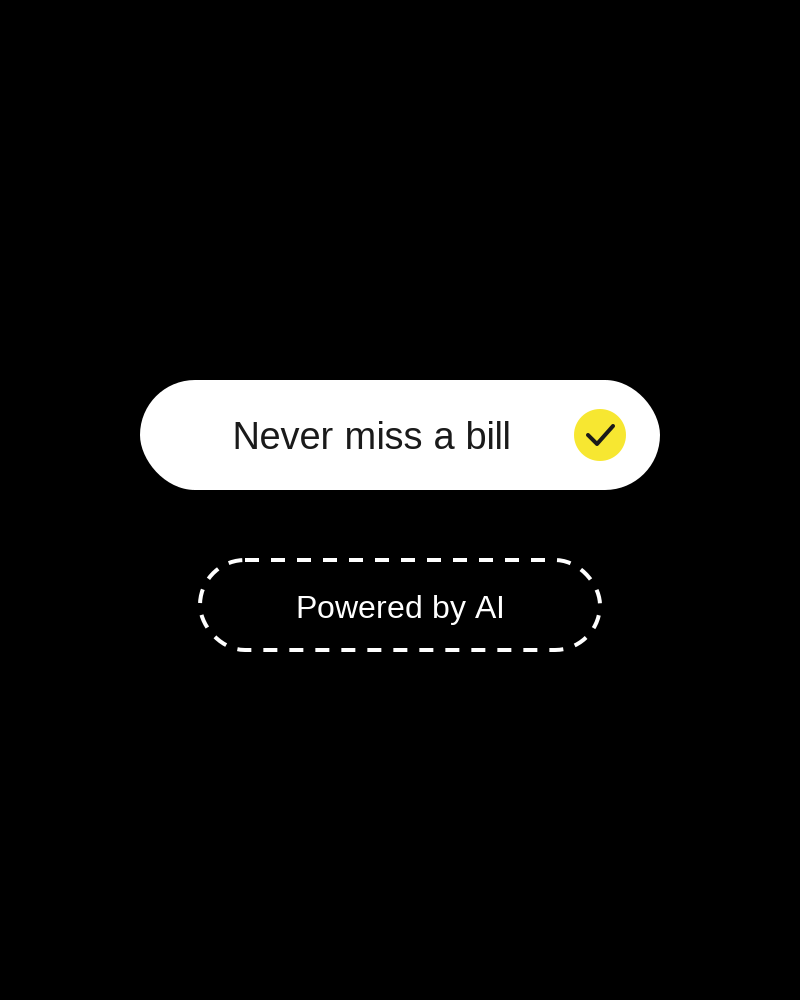
Strong value propositions are about what the product helps you achieve, not the technology behind it. “Make decisions faster.” “Skip the line.” “Never miss a bill again.” Each describes an outcome.
Weak ones describe the machine. “Redesigned UI.” “Ten new features.” “More powerful than ever.” They leave you to guess why any of that matters.
“Powered by AI” is the same mistake with a newer word.
Why “powered by AI” falls short
In 2025 the pressure came from investors and stakeholders: add generative AI, put it in the pitch. In 2026 the pressure is the same but the audience has changed. People have used AI features that hallucinated, that slowed them down, or that quietly replaced a thing that worked. The Nielsen Norman Group calls 2026 “the year of AI fatigue”: “When everything gets an AI sparkle, it becomes noise, not novelty.” (State of UX 2026)
There is also a measured cost. A 2024 study by Mesut Cicek, Dogan Gursoy and Lu Lu ran experiments with more than 1,000 adults in the US. Participants saw identical product descriptions, except that one version mentioned artificial intelligence and the other did not. Across eight product categories, the “AI” version lowered purchase intent. The effect ran through emotional trust: mentioning AI reduced it, and lower trust reduced the wish to buy. The penalty was largest for high-risk purchases like medical devices and financial services (WSU press release, paper in the Journal of Hospitality Marketing & Management).
So the label does two bad things at once. It makes people guess what the product does, and it makes them trust it less while they guess.
Grammarly is a useful contrast. Its pitch leads with what happens to your writing (your point gets across, it still sounds like you) rather than with the model behind it. That framing answers the worry people actually have about AI-written text (that it sounds like nobody) before they have to ask.
What happens when teams lose focus
AI is broad. It can draft, summarize, classify, generate, plan. Without a clear promise, a team is tempted to show as much of that range as possible. The result is usually a generic chatbot bolted to the side of the product, or a grab bag of features with no shared goal.
Users looking for a specific solution meet an unfocused product. Teams that chased “AI for AI’s sake” struggle to explain, even to themselves, what the thing is for.
Teams anchored by a promise do the opposite. They add AI only where it serves the journey. They cut what doesn’t. The product is simpler to describe, easier to adopt and more likely to keep its users once the novelty wears off.
The stakes in B2B
The temptation is just as strong in B2B. Leaders buy AI features to look current, even when the feature does not map to a workflow anyone has. It demos well. It does not survive the renewal conversation.
Teams that start from a user-centered promise can choose the kind of AI integration that solves a real problem (an audit that flags the three contracts worth reading first, not “AI insights”). A product with a tangible benefit beyond being AI-enabled is the one that still has customers after the first excitement.
A better path
AI can play a large role in a product. It is not a value proposition on its own. Start with the user problem. Decide what you promise. Then ask whether AI is the right way to keep the promise.
If the answer is yes, the word AI can still appear in the product. Transparency about what the system does is part of trust, and in Europe it is also law for some uses. But it belongs in the explanation, not in the headline. The headline is the promise.
Sources
- Using the term ‘artificial intelligence’ in product descriptions reduces purchase intentions, Washington State University, July 2024
- Cicek, Gursoy and Lu, “Adverse impacts of revealing the presence of ‘Artificial Intelligence (AI)’ technology in product and service descriptions on purchase intentions”, Journal of Hospitality Marketing & Management, 2024
- The State of UX in 2026, Nielsen Norman Group